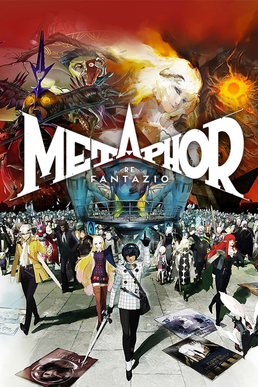
For what I think is a really underrated game, I chose Metaphor Re:Fantazio. This game I do was realeased in 2024 and understand that this game it is HIGHLY praised. Out of 100 game critcs scored it in the 90s and the common player base scored it above the 80s, it even got a game of the year nomination. So I should say this game isn't underrated but instead undisscussed.
Why I think it should be talked about more
When Atlus first revealed Metaphor: ReFantazio, it immeditly got the attention of longtime fans, myself included. It has a beautiful art style, it is a brand-new IP from the creative minds behind Persona 3, 4, and 5, and the story is one of the most well written I've ever experienced in gaming. That should have been headline-dominating news across the gaming world.
And while it did get a decent amount of attention I feel as though it should've been talked about more. Mainly because of two reasons its message and story. As a short summary Metaphor: ReFantazio, follows a young protagonist in a divided fantasy kingdom who enters a royal tournament to determine the next ruler after the king's death. Along the way, he confronts deep-rooted prejudice, class inequality, and political corruption embedded in society. This is very suface level but it goes much deeper about going against coruption, grief, and self acceptance.
Why this game isn't talked about enough
Living in Persona's Shadow
Full of material ideas about race, class, and society that are all too necessary in our tumultuous times, Metaphor is an experience that stays with you long past the credits.
—Brandon R Chinn, Metaphor: ReFantazio and the Power of Fantasy
After Persona 5 exploded into mainstream success, Atlus cemented itself as one of the most respected RPG developers in modern gaming. But success can be a double-edged sword. When a studio creates something massively popular, every future project gets compared to it.
Instead of being discussed as its own identity, Metaphor Re:Fantazio. is often reduced to “the fantasy Persona.” That label limits it. It frames the game as an offshoot rather than what it actually is: a completely new universe with different themes, mechanics, and narrative ambitions. When people only measure it against Persona, they miss what makes it unique.
Depth Isn't Always Mainstream-Friendly
Atlus games aren not lightweight experiences. They're dense, stylish, and mechanically layered. Often long and demanding. That depth is part of their brilliance—but it can also limit accessibility. Not everyone is ready to commit 70 to 100 hours to a story-heavy, system-rich RPG. Because of that, Metaphor Re:Fantazio. may naturally appeal to a more niche audience, at least initially. And in the world of gaming discourse, niche acclaim does not always translate to widespread recognition.
The Turn-Based Bias
One of the biggest (and most overlooked) reasons Metaphor Re:Fantazio. doesn not get discussed more is its turn-based combat. While turn-based systems are beloved within the JRPG community, mainstream gaming trends have shifted heavily toward real-time, action-oriented combat. Flashy gameplay, cinematic boss fights, and fast-paced mechanics tend to dominate majority of peoples interest and streaming platforms.
Hope is only a step behind a clear conscious
—Atlus, Metaphor: ReFantazio
Turn-based gameplay, on the other hand, is more strategic and methodical and it does not always produce viral moments. It requires patience and planning rather than reflexes. For some players, that immediately makes it feel “old-fashioned,” even though modern turn-based systems, especiallythose of Atlus, are deeply refined and stylish. Because of that perception, some gamers dismiss the title before even engaging with its systems. And when fewer people jump in, fewer large-scale conversations follow.
Final thoughts
Between living in the shadow of Persona, embracing turn-based combat in an action dominated era, and having a deep and heavy story that need commitment, Metaphor Re:Fantazio. faces uphill battles when it comes to mainstream recognition. But sometimes the most ambitious games are not the loudest, they're the ones that quietly build loyal audiences and lasting impact.